

Overview and Key Specifications
The Korg Minilogue XD is a 4‑voice polyphonic analog synthesizer featuring dual oscillators per voice, a 12‑band EQ, built‑in effects, and a 16‑step sequencer. It offers 16‑bit audio, USB‑MIDI, CV in/out, and a 7‑segment display for real‑time control. It supports 48‑voice polyphony, patching 3‑band filter.
Feature Highlights
The Korg Minilogue XD is a 4‑voice polyphonic analog synthesizer that blends classic analog warmth with modern digital flexibility. Each voice contains two oscillators that can be tuned in unison or detuned for thick chords, with a wide range of waveforms including sawtooth, triangle, pulse, and noise. The dual‑oscillator architecture supports complex FM and ring‑modulation, giving the synth a vast sonic palette. A 12‑band EQ allows precise tonal shaping, while the built‑in effects section offers reverb, chorus, delay, and a unique “X‑D” effect that blends analog and digital processing. The 16‑step sequencer features real‑time recording, step‑edit mode, and a “ghost” function that lets you hear the pattern while editing. USB‑MIDI connectivity and CV in/out ports make the Minilogue XD a versatile addition to any rig, and the 48‑voice polyphony ensures that even the most complex patches stay full and rich. The synth’s metal chassis, robust power supply, and full set of knobs, buttons, and a dedicated patch bay provide a tactile, reliable experience. The 7‑segment display gives quick parameter feedback, and the “X‑D” effect can be routed to the main output or to an external effects processor. With its intuitive workflow, the Minilogue XD is designed for both studio production and live performance, offering a powerful combination of analog sound, digital control, and expressive performance features. Its size and power consumption make it so ideal for touring musicians.!!

Power and Connectivity
Power: 100‑240V AC, 50/60Hz, 1.5A. USB‑MIDI for PC control. Audio: 3.5mm stereo line out, 1/4” headphone, 1/4” mono line in. CV: 1‑channel input, 1‑channel output. Safe‑mode includes short‑circuit protection. The unit also features 1‑channel CV input, CV output, 3‑band EQ
Power Supply, Safety, and Audio Inputs/Outputs
The Minilogue XD runs on a 12‑V DC power supply delivered through a detachable 2‑pin barrel connector. The unit accepts 100–240 V AC input, automatically converting to the required DC voltage. Inside the chassis is an over‑current protection circuit that safeguards the synthesizer against power surges and short‑circuits. For reliable operation, use the supplied power adapter or a compatible 12‑V, 2‑A supply; a lower current rating may cause instability or failure to power on.
Audio output is provided via a 1‑/4‑inch TRS jack, selectable between mono and stereo through a 3‑way switch. The output level is controlled by the master volume knob, and a separate headphone output with its own volume control is available for private listening. Input options include a 1‑/4‑inch TRS jack for line‑level signals and a dedicated CV input that accepts external modulation sources to influence oscillator pitch, filter cutoff, and envelope parameters. The device also offers a 1‑/4‑inch TRS input for line‑level audio, allowing you to mix external sounds into the internal signal path.
- Power: 12 V DC, 2 A (internal)
- AC Input: 100–240 V, 50/60 Hz
- Audio Output: 1‑/4‑inch TRS (mono/stereo)
- Headphone Output: 1‑/4‑inch TRS, independent volume
- Audio Input: 1‑/4‑inch TRS (line/CV)
- Safety: Over‑current protection, short‑circuit guard
For optimal performance, keep the power cable away from high‑current devices and avoid exposing the unit to moisture or extreme temperatures. The enclosure is grounded via the power connector, reducing electromagnetic interference and ensuring compliance with safety standards. Always disconnect the power before cleaning or performing maintenance.
Physical Layout and Controls
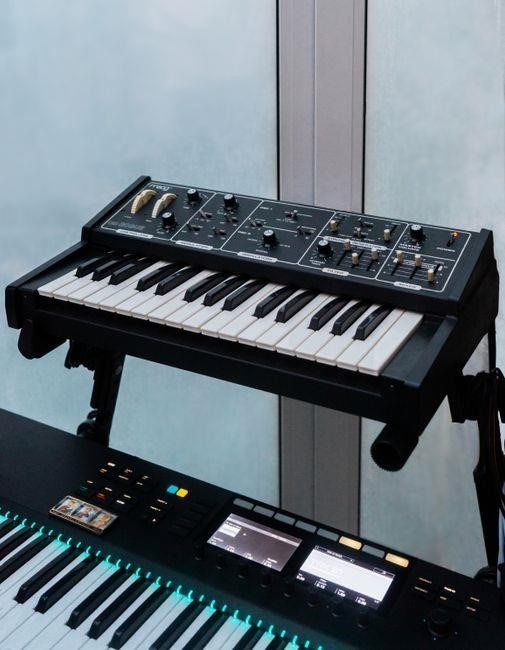
The Minilogue XD front panel features 4 voice knobs, 2 oscillator switches, a 12‑band EQ, and a 16‑step sequencer grid. Each voice has pitch, filter, and envelope knobs, while controls include volume, pan, and EQ. The patch bay has 8 CV I/O, 3‑band filter, and MIDI I/O!!!.
Buttons, Knobs, Switches, and Patch Panel
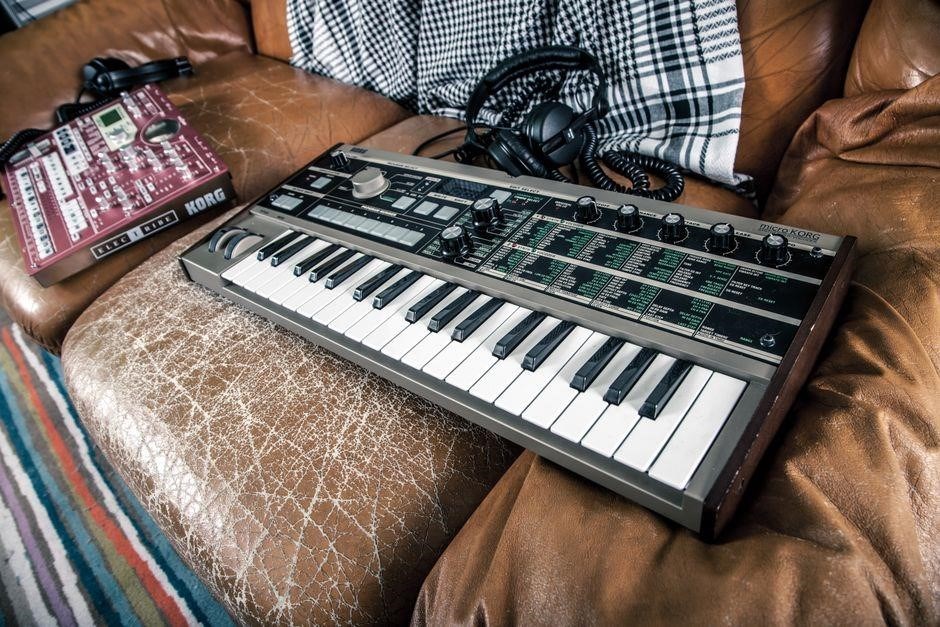
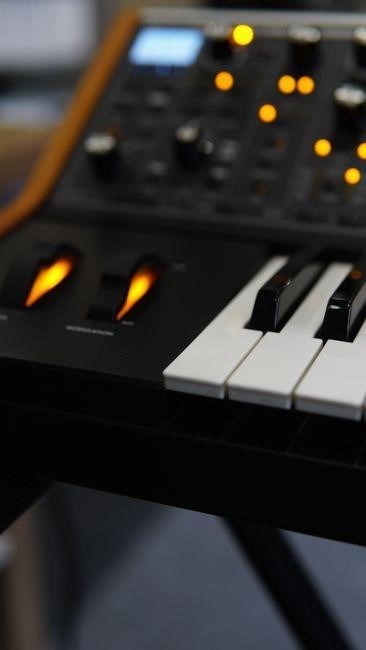
The Minilogue XD’s front panel is split into control, patch bay, and status display zones. The control area holds rotary knobs, push‑buttons, and a multi‑function encoder. Each voice has knobs for oscillator pitch, detune, and level; the master section includes knobs for filter cutoff, resonance, envelope attack, decay, sustain, release, and a global filter mode selector. The 12‑band EQ is accessed via a dedicated knob that cycles through bands, with a separate knob for gain per band.
The button layout features a 4‑way switch for voice mode (mono, poly, unison, split), a 3‑way switch for built‑in effects (delay, chorus, reverb), and toggle buttons to enable or disable modules like arpeggiator, step sequencer, and LFO. A large “Play” button starts the sequencer, while a “Record” button captures real‑time performance. The “Menu” button opens navigation, “Back” returns to the previous screen, and a dedicated “Reset” restores factory defaults.

The patch panel contains 12 input sockets and 12 output sockets, each labeled with the module name. Inputs accept CV and gate for oscillators, filter, envelope, LFO, and sequencer; outputs provide CV and gate for external modulation. The panel also includes a 1‑U rack mount rail and a 12‑V DC power connector. All controls feature tactile knobs and clear, high‑contrast markings for quick identification.
All switches and knobs are rated for 10,000 cycles, ensuring durability during intensive studio use. The patch bay’s color‑coded sockets aid in rapid routing, and the integrated LED indicators provide instant visual feedback for active signals.
Display and Navigation
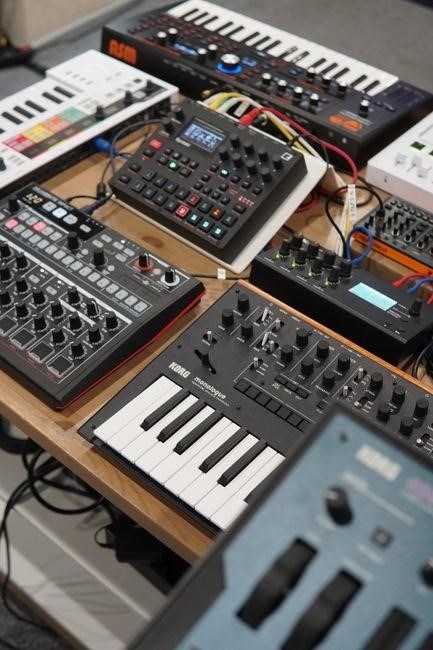
The 7‑segment LCD shows parameter values, patch names, and menu options. Navigation uses the 3‑way knob, button, and arrow keys. Shortcuts allow quick access to presets, waveform selection, and patch editing. The display updates in real time. The interface supports touch‑pad!
LCD Functions, Menu System, and Shortcuts
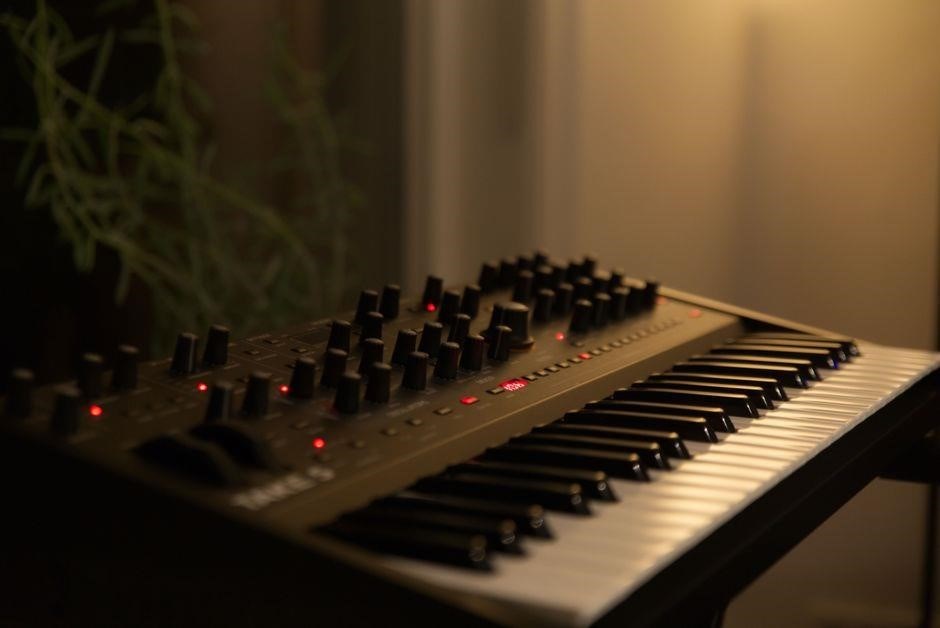
The Minilogue XD’s 7‑segment LCD offers real‑time visual feedback on oscillator tuning, filter cutoff, envelope stages, and effect levels. Pressing the LCD button toggles between the main display and a parameter edit mode. In edit mode, the cursor highlights the current parameter; arrow keys adjust values, while the SHIFT key locks the cursor to a specific row for rapid tweaking.
The menu system is accessed by holding LCD and SHIFT simultaneously. The hierarchical menu is divided into sections such as Patch, Global, Sequencer, and Effects. Navigation uses the UP and DOWN arrows to move through items, and the ENTER key to select. The BACK button returns to the previous screen. Each menu item displays a brief description and current value, and many allow direct editing by holding ENTER to jump to the edit screen.
Shortcuts streamline workflow: LCD + UP quickly jumps to the next patch, LCD + DOWN to the previous patch. LCD + SHIFT + UP/DOWN cycles through the 16 voices, showing the active voice number. The LCD + PLAY button starts the built‑in sequencer, while LCD + STOP halts it. For quick parameter recall, the LCD + SHIFT + PLAY key restores the last preset’s settings. The LCD + SHIFT + STOP key saves the current patch to the selected bank.
Additionally, the LCD button can be held for 3 seconds to enter the factory reset mode, wiping all user data. The display also shows the current firmware version and provides prompts for updates via USB. The combination of a clear LCD, intuitive menu, and handy shortcuts makes the Minilogue XD accessible for both beginners and seasoned sound designers!!
Oscillator and Voice Architecture
The Minilogue XD houses four analog oscillators per voice, each selectable as saw, pulse, or triangle. Dual‑oscillator sync and detune allow rich harmonics. A 12‑band EQ and 3‑band filter shape tone, while the 16‑step sequencer can record and play back each voice independently. 48‑voice polyphony deepens.
Waveforms, Detune, and Voice Assignment
The Minilogue XD offers two analog oscillators per voice, each selectable from four fundamental waveforms: sawtooth, square, triangle, and noise. The oscillators can be independently tuned, allowing for classic detune effects or complex phase relationships. The dedicated Detune knob on each oscillator ranges from 0 to 10 cents, giving subtle chorus‑like depth or pronounced unison. In addition, the “Waveform” selector lets users blend the two oscillators with a 0‑100% mix, creating rich composite timbres.
Voice assignment is flexible: the synth supports four simultaneous voices, and each voice can be routed to a separate patch or shared among voices in unison mode. The “Voice” menu provides options for “Polyphonic” (each note uses its own voice), “Monophonic” (single voice with legato), and “Unison” (all voices play the same note). Users can also assign different oscillator settings to each voice, enabling layered sounds without external hardware. The “Voice Assign” function allows the operator to lock a voice to a specific patch, ensuring consistent timbre across performances.
Detune can also be applied globally via the “Detune” menu, affecting all oscillators simultaneously. This global detune is useful for creating thick, chorus‑like textures across all voices. The combination of per‑oscillator detune, waveform selection, and voice assignment gives the Minilogue XD a wide expressive range, from tight, clean leads to lush, evolving pads. It also supports external modulation.
Filters, Envelopes, and Modulation
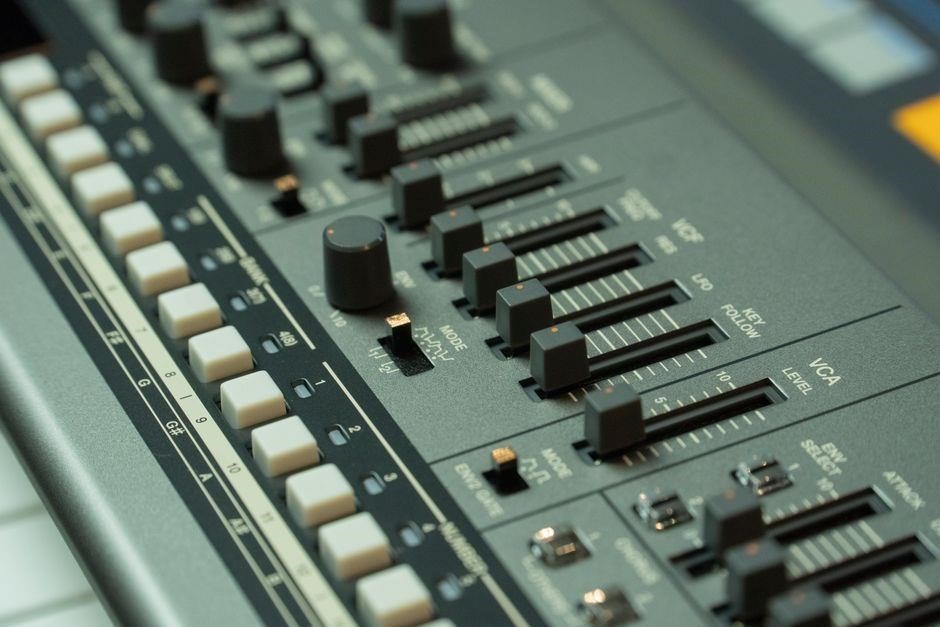
The Minilogue XD offers a 12‑band EQ and a 3‑band resonant low‑pass filter with adjustable R‑range. Each voice has two ADSR envelopes for filter and amplitude, plus LFOs for pitch, filter, and amplitude modulation. CV/MIDI control is fully routable. 2026. Korg.!!
Filter Types, R-Range, and Envelope Coupling
The Minilogue XD’s filter section is a cornerstone of its sonic versatility, offering two distinct filter types that can be blended or used independently. The first is a classic 12‑pole low‑pass filter, modeled after the iconic Korg 1000, delivering smooth, resonant slopes and rich harmonic content. The second is a 4‑pole resonant low‑pass filter, providing a tighter, more aggressive character, ideal for punchy bass lines or aggressive leads. Users switch between modes via the Filter Mode knob or lock the choice per voice, allowing complex timbral layering.
R‑Range, the resonant control, spans from 0.0 to 1.0 in fine increments, giving precise tuning of the filter’s resonance peak. The resonance can be modulated by the ADSR envelope, LFO, or external CV, creating dynamic sweeps that evolve over time. Envelope coupling lets each voice’s filter envelope follow the amplitude envelope, a dedicated filter envelope, or a user‑defined envelope. This flexibility lets performers sculpt evolving timbres, from subtle filter sweeps that follow a note’s decay to aggressive, percussive bursts that sync with the sequencer.
The filter’s cutoff frequency is CV‑driven, allowing external controllers to shape it in real time. The built‑in envelope generator offers four stages—Attack, Decay, Sustain, Release—each adjustable via the Env knob. When the envelope is coupled to the filter, the Env‑Filter switch activates, and the filter’s cutoff follows the envelope’s contour. This coupling can be locked per voice, ensuring consistent behavior across polyphonic layers.

Sequencer, Effects, and Connectivity
The Minilogue XD’s 16‑step sequencer records up to 32 steps per track, with adjustable tempo, swing, and step‑delay. Built‑in effects include delay, chorus, distortion, and reverb, each with independent mix controls. USB‑MIDI, CV in/out, and audio I/O allow seamless studio integration. Live rig ready!!
Step Sequencer, Built‑in Effects, and MIDI/CV Support
The Minilogue XD’s 16‑step sequencer is fully programmable, allowing independent control of pitch, gate, velocity, and modulation parameters for each step. Users can record live performance data or edit step values manually via the on‑board menu. The sequencer supports tempo‑synchronized playback, swing, and a “ghost” mode that lets the synth follow an external MIDI clock while still recording local steps.
Built‑in effects include a versatile 3‑band EQ, a 24‑dB/8‑stage resonant low‑pass filter, and a 12‑band multi‑effect processor featuring chorus, delay, reverb, and distortion. Each effect can be routed to any of the four voices or to the master output, and the effect parameters are fully controllable via the sequencer’s step‑by‑step automation.
MIDI and CV connectivity is comprehensive: the unit offers standard MIDI In/Out/Thru, a 5‑pin DIN jack for CV input, and a 3‑pin jack for CV output. The synth also supports USB‑MIDI for integration with DAWs, and the internal patch matrix allows routing of CV signals to any oscillator or filter.
The Minilogue XD’s architecture allows intricate layering of sounds, with each voice capable of independent modulation and routing. Users can sculpt textures by combining the analog signal path with the digital effects engine, creating pads, leads, and rhythmic sequences. Its intuitive interface, coupled with robust build quality, makes it a versatile tool for studio production and live performance, bridging classic analog warmth with modern digital flexibility and and!!